The Origin
Apolo Herrera grew up in White Center, the Seattle neighborhood that locals called Rat City. He'd come from Acapulco originally, but he spent 25 years in the Pacific Northwest, and for 18 of those years, addiction was the organizing principle of his life. Crack cocaine, heavy drinking, cigarettes, whatever else he could get hold of.
He took his first dose of ibogaine at home. He couldn't afford a clinic. Within weeks, the cravings were gone.
"I did the experience, and I got clean and sober," he told me on a video call from the clinic, where two patients were flooding in adjacent rooms as we spoke. "I haven't touched it since then. It's been 12 years."
"Any clinic can help you get clean for a few days. The real key is what happens next."Apolo Herrera
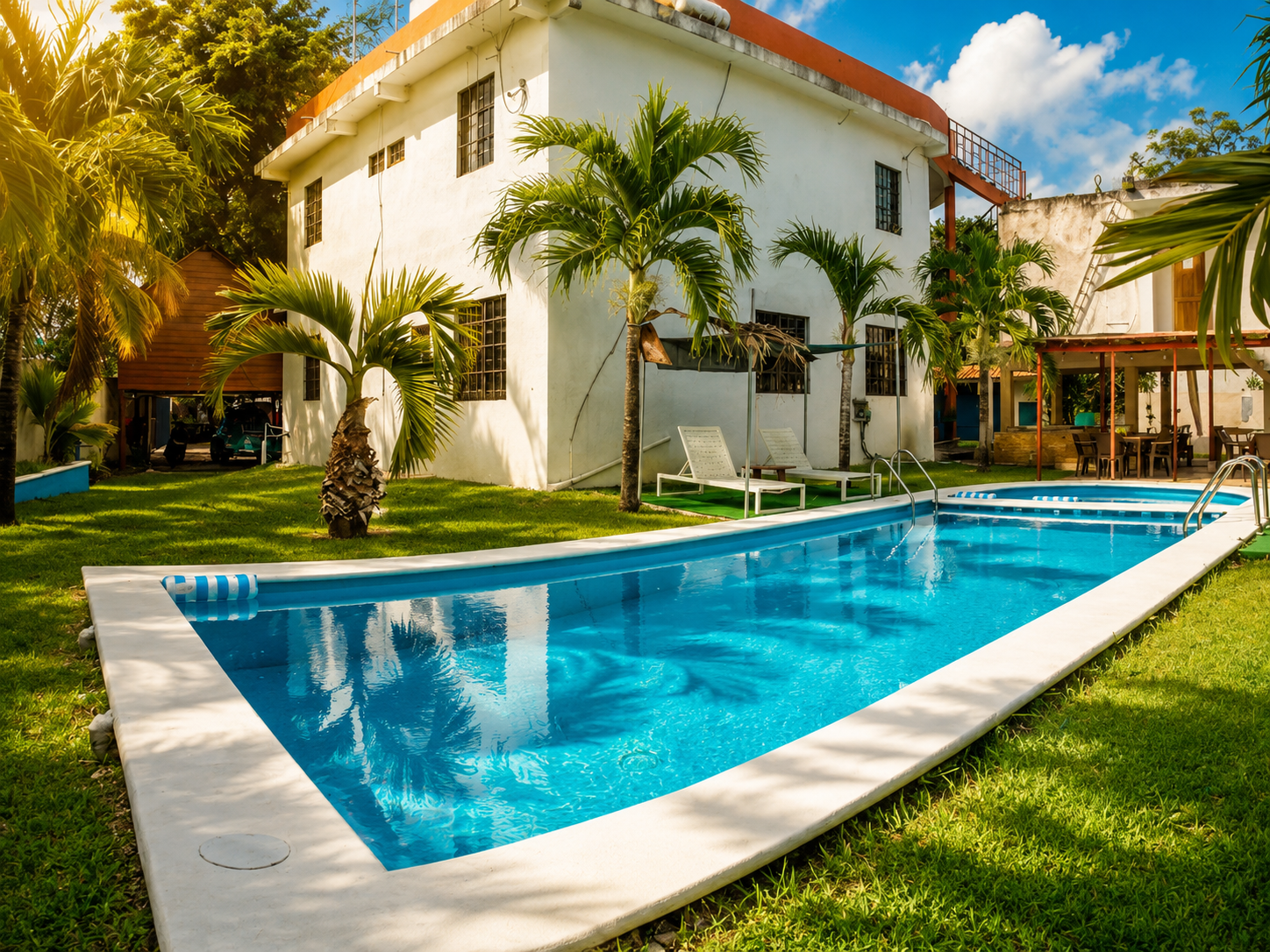
All three of them were on the call: Apolo, Dr. Liz, and Medical Director Dr. Mario Germán Vázquez. Apolo translated between English and Spanish throughout, relaying questions to Dr. Liz and clinical details from Dr. Mario without ever losing the thread. Partway through, he walked the camera through the property: bungalows, the temazcal, the cenote cold plunge, the kitchen, the chef. Before we finished, Dr. Liz read my energy unprompted, said she rarely sees yellow auras, and offered to research what it meant. It felt less like a clinic pitching itself than like a working team that happened to have an hour.
What he did next is what matters. He spent two years training at the clinic of David Dardashti, one of the pioneers of ibogaine treatment in Mexico, learning protocols and learning to read patients. Then, after a few years and one dissolved business partnership, he met Dr. Elizabeth García Hernández.
He was skeptical of the spiritual dimension of her work at first. He's a practical person. "But then," he said, "how does she know things?" He stopped being skeptical. That was six years ago. He's been working full-time with Dr. Liz for four.
The Team
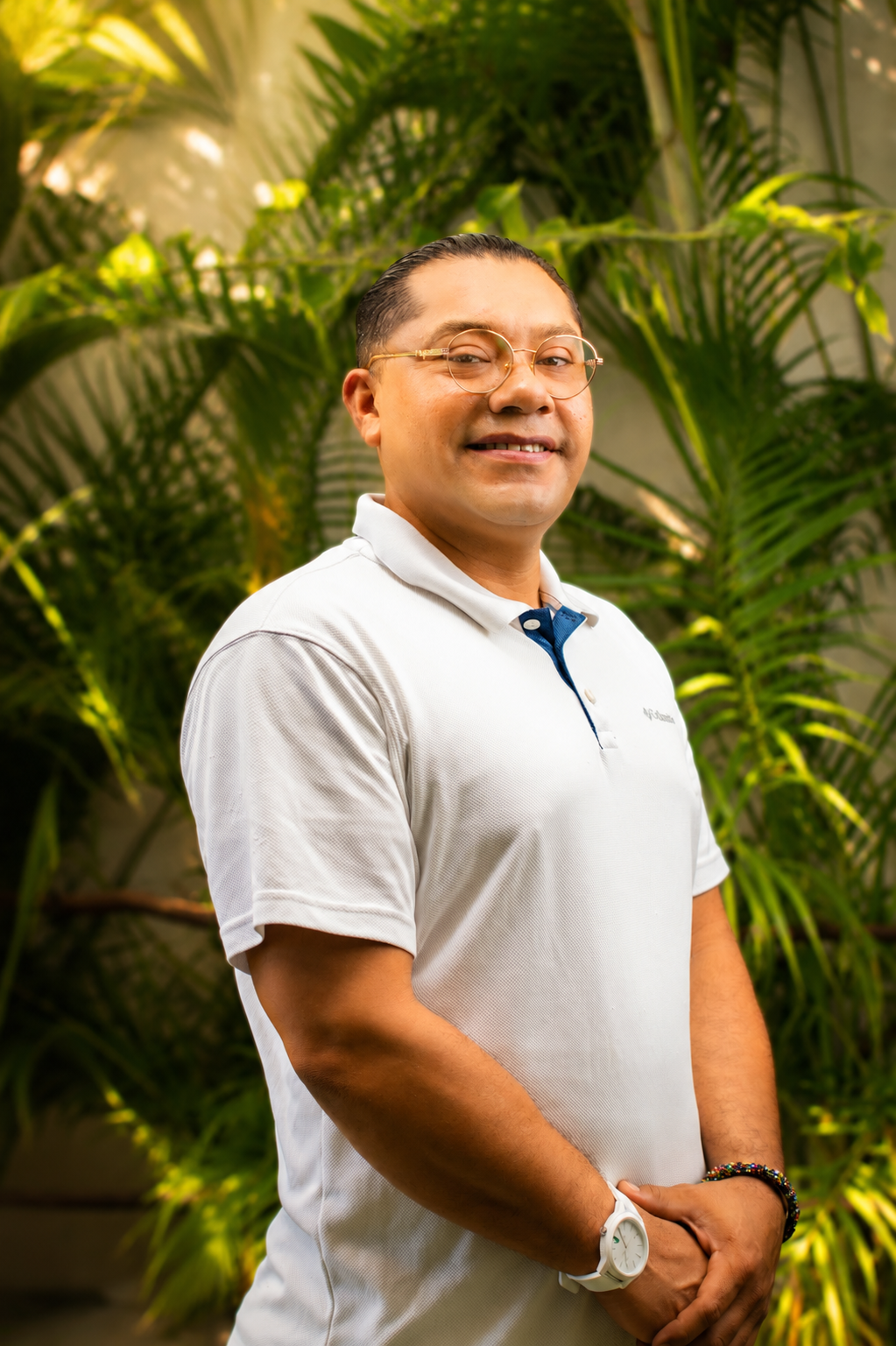
Apolo Herrera leads patient intake, facilitation, and English-language communication. He's the person most patients will spend the most time with, and the connection is straightforward: he's been where they are. He knows the specific texture of what ibogaine interrupted in his own life, and that comes through in how he works with people. He describes his role simply. "Any clinic can help you get clean for a few days," he said. "The real key is what happens next."
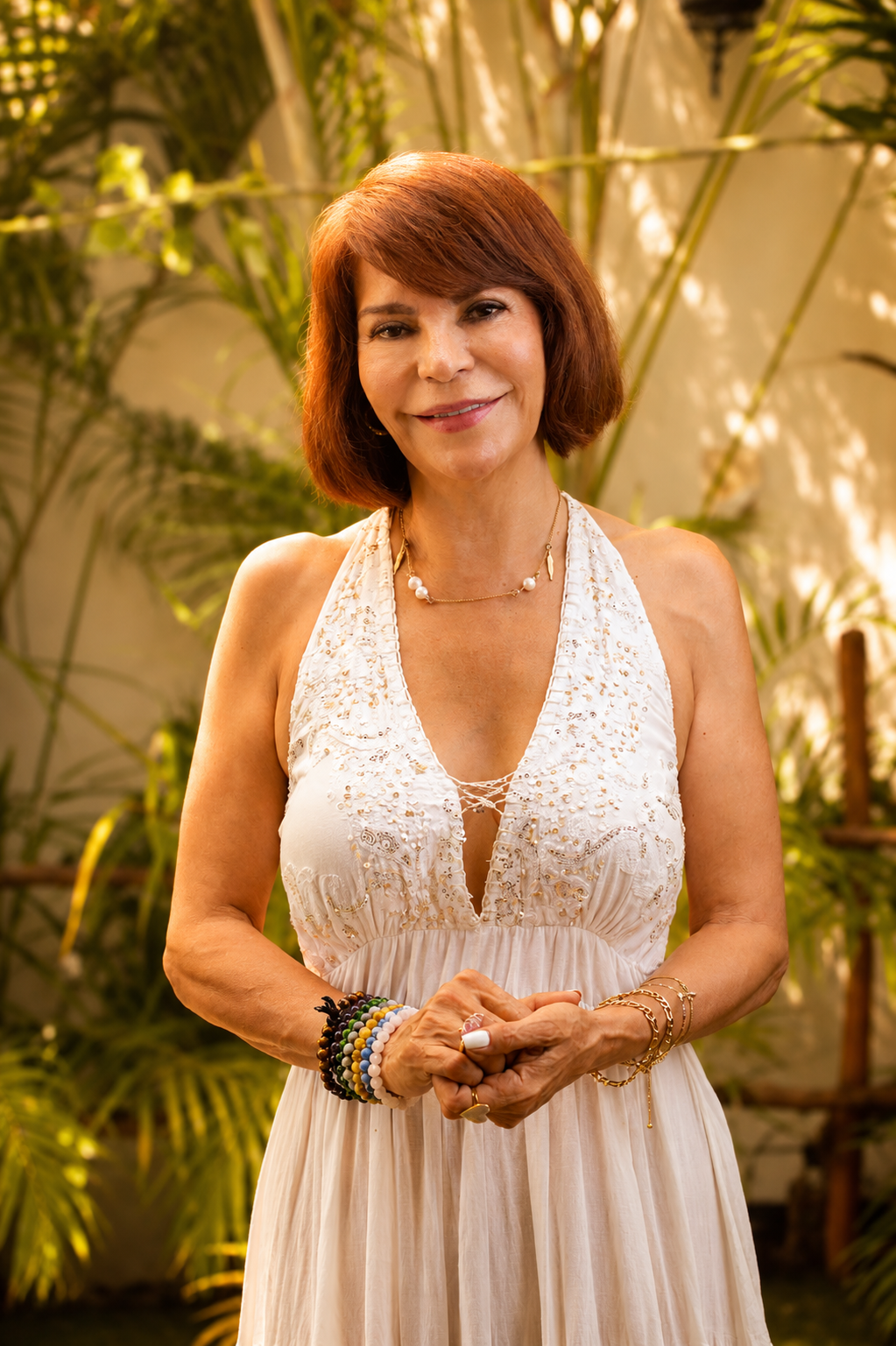
Dr. Liz is the clinic's founder and therapeutic director. She holds a master's degree in psychology and mindfulness, has published two books about her own journey toward this work, and has been running the clinic for going on seven years. She doesn't speak English, so all patient communication goes through Apolo or in Spanish, but the work she does operates at a level that doesn't require much translation. "You feel the energy of the place," Apolo said. "When you walk in, you feel this beautiful energy." Before every flood dose, she performs a short cleansing ceremony to settle the patient's nervous system and clear whatever they're carrying in the door. Patients who expect a clinical environment are often caught off guard by it.
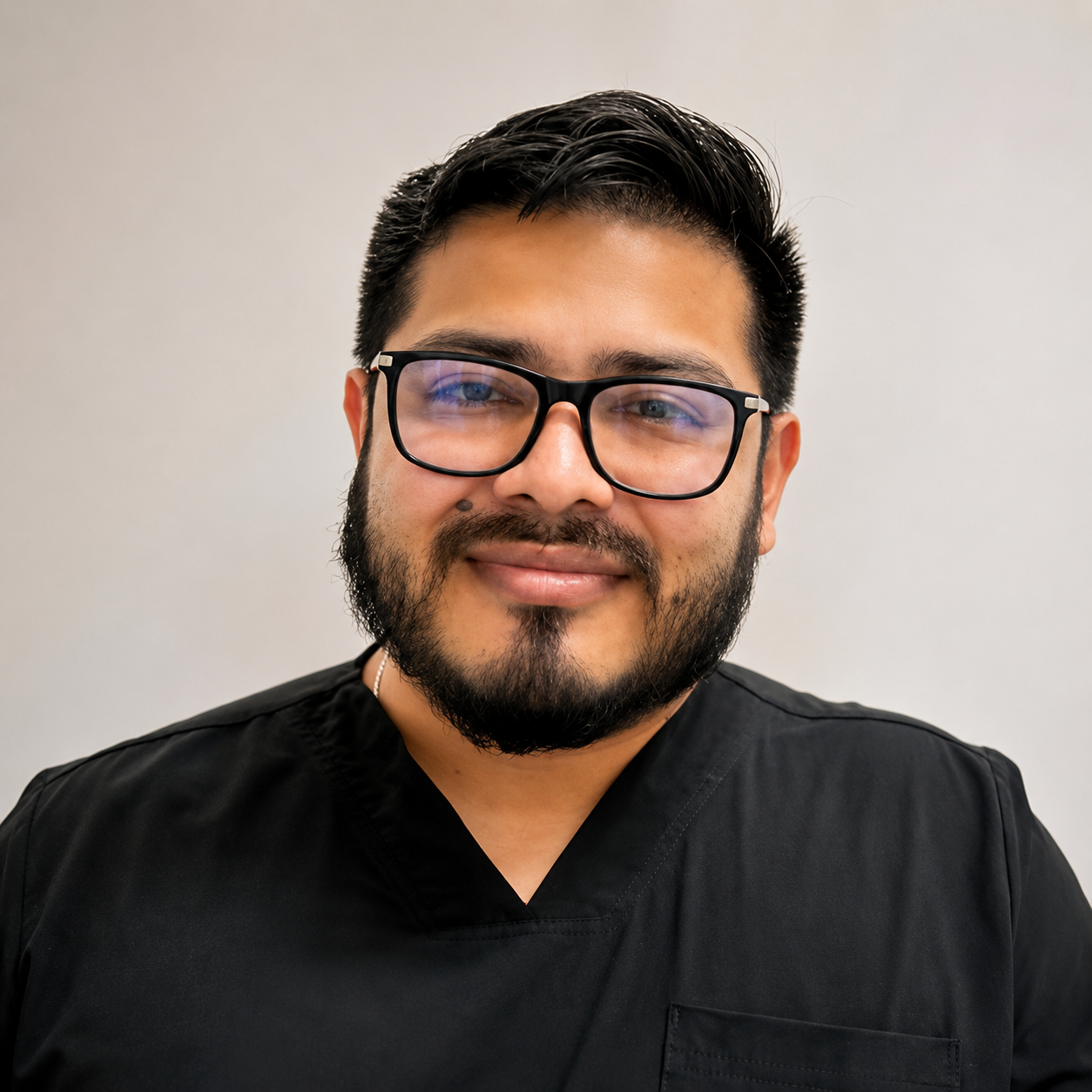
Dr. Mario Germán Vázquez came to ibogaine four years ago with no prior exposure to it. A mutual acquaintance introduced him to Apolo, he came to see what was happening, and he stayed. He now oversees all intake protocols and manages every patient's medical side throughout the program. He holds a general medical license (Licenciatura en Medicina) from the Universidad de Quintana Roo, issued in 2018, licensed and practicing for roughly eight years.
M.A. Elizabeth García Hernández
M.A. Elizabeth García Hernández lost her firstborn son, Jhan, before he was grown. The grief collapsed her into fibromyalgia and severe depression, into diagnoses that named what her body was doing without touching what she was carrying. She found her way out through ancestral medicines: Yagé, Kambo, Bufo. Not as a patient in the conventional sense, but as someone following a thread she'd been aware of since she was nine years old, when she began sensing and seeing things she had no framework to explain.
She's a psychologist and mindfulness specialist by training, author of two books: Madre, No tengo anclas en la tierra and Lo que los demás no pueden ver. She was honored at the "Voices that Transform" event in Boca del Río. None of that fully describes what she does.
What she does is difficult to put in a sentence. She reads people, and the precision of it tends to stop skeptics mid-sentence. Before every flood dose, she performs a short cleansing ceremony (about ten minutes) to settle the patient and clear what they're carrying before the medicine begins. Afterward, she interprets the journey: what surfaced, what it might mean, what the person might do with it. No two interpretations look alike because no two people do.
"How does she know things?" Apolo said. He was skeptical when he first came to work with her. He isn't anymore.
At the end of our call, without being asked, she read my aura. She said she rarely sees yellow, didn't yet fully understand what it meant in my case, and would research it and follow up. It was an offhand gesture, and a precise one, and it said more about the quality of her attention than anything on a website could.
Ibogaine does a specific kind of work: chemical, neurological, interruptive. Whether that interruption becomes something lasting depends on what happens in the days around it: the preparation before, the interpretation after, the sense that someone is genuinely attending to what came through. Dr. Liz is what sits between the medicine and what it leaves behind. The ibogaine does its specific work. What she does with what comes after it isn't something you can find on a protocol sheet.
Who They Treat
The four programs at Ahal are organized by presenting substance and situation. PTSD, anxiety, and complex emotional processes sit in one program. Alcohol, cocaine, and standard opioids in another. Fentanyl and kratom, both high-risk substances requiring extended preparation, in a third. Suboxone and Subutex in a fourth.
That last program is unusual. Most clinics won't touch maintenance medications. Ahal does, through a 90-day at-home tapering protocol managed by a partner physician in Florida before the patient arrives in Mexico. The transition has to be complete before any ibogaine is administered. They don't compromise on that. Apolo is speaking to the Awake.net community about this protocol within the next few weeks. He's one of a small number of facilitators doing it this way.
The clinic doesn't take patients who are medically unsuitable, but the bar for what counts as "suitable" is wider than at many clinics. Blood pressure conditions, diabetes, high cholesterol: these don't automatically disqualify someone. Dr. Mario evaluates each case individually.
What Happens When You Arrive
Every patient goes through the same intake protocol regardless of their program. EKG first, with specific attention to the QT interval. Blood work, urinalysis, and a 14-panel drug screen with a separate fentanyl strip. Results come back the same day, and Dr. Mario reviews them before the protocol is confirmed.
For fentanyl and kratom patients, there's a stabilization phase before the flood dose: a switch to short-acting opioids, 72-hour monitoring, and confirmation that the high-risk substances have cleared the system. The clinic's most complex case involved a couple from Philadelphia presenting with fentanyl and tranquilizers together. Five days of detox on morphine sulfate, then ibogaine boosters, then two flood doses. They stayed 14 days. At the time of our call, they were 45 days sober and back in Philly.
IV solutions are calibrated to what the blood work shows: saline, glucose, banana bags for electrolyte replenishment, adjusted for each patient. Seizure medication is on hand as a standard precaution. The clinic holds a Licencia de Funcionamiento from the city of Playa del Carmen (license #119127), the municipal operating permit required to run a clinical facility. COFEPRIS, Mexico's federal health authority, provides regulatory oversight.
The Flood Dose
The night before the flood dose, there's a letter-writing ceremony. Intentions, things to release, things to build. It sounds simple. Patients often tell me that it's where they first realize how much they've been carrying.
The morning of the session, Dr. Liz performs a short cleansing ceremony to settle the patient before the medicine begins.
Patients take the flood dose in their own rooms, not a shared treatment room. A cardiac monitor runs for six to seven hours. Music starts roughly 45 minutes to an hour after dosing, when the effects begin. Candles. Blindfold. IV running.
The visual phase typically runs five to seven hours. You've probably read that ibogaine lasts 24 hours. The acute experience doesn't. "Even if I gave a strong dose," Apolo said, "I would say five hours, maybe seven."
Ahal uses pharmaceutical-grade ibogaine HCl (99.6%), Total Alkaloid Extract (TA), and Purified Total Alkaloids (PTA) when clinically indicated. The form varies by case.
Recovery and Integration
Recovery days at Ahal are not passive. The temazcal is central to them: a traditional Mayan sweat lodge, volcanic stones, wood-fired. Body massages, sound healing, yoga, and time outside. Cenotes are five minutes away; the beach is ten; caves are nearby. These aren't incidental amenities. Being in water after ibogaine, Apolo says, reconnects people to life in a way that's hard to describe before it happens.
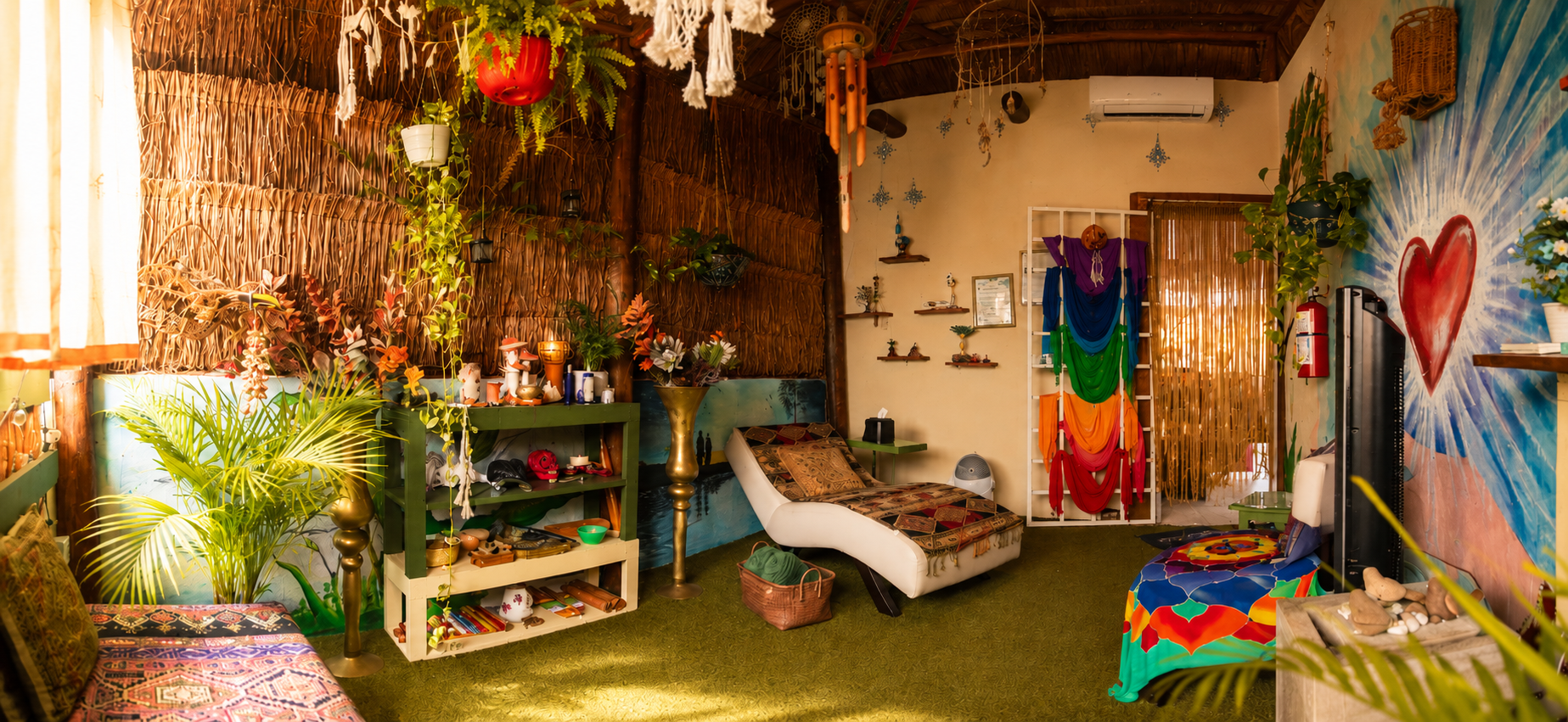
The clinic also uses psilocybin in modest doses on integration days, particularly for fentanyl and suboxone patients, to support neurological rewiring. And bufo (5-MeO-DMT from the Sonoran toad) is available as an optional add-on after the ibogaine work is complete. "It's like the cherry on top," Apolo said. "Pure love."
Dr. Liz interprets each patient's journey during this phase. What came up during the flood, what it might mean. The conversation differs for every patient because what emerges differs for every patient. She also does individual therapeutic work in the days following the medicine, drawing on her clinical background and her longer experience of reading people.
Aftercare
Before patients leave, Apolo connects them with two life coaches and a psychotherapist familiar with psychedelic integration. He asks for a commitment: five to eight sessions, once a week, after returning home.
About half follow through. He says this plainly, without softening it. "We are lazy," he said. "That's the answer." He means it as a structural observation, not a judgment. The medicine does something real. Whether it holds depends on the work done in the months after.
The families of patients are involved where it's useful. During our call, Apolo was working with a young man from New York whose wealthy parents had been financially present and emotionally absent. The integration work, in that case, wasn't just about the patient.
What Sets Them Apart
I asked Apolo, near the end of our call, why he reached out to IbogaineAdvisor.
"A lot of people don't know us," he said. "That's why I got hold of you."
He's right. They're not well known outside the community, though inside it, Apolo knows most of the clinic directors in Mexico and attended the Tepoztlan conference in January with seven other clinics. They don't advertise the way the bigger operations do. They don't need to be a hospital to feel like a serious place.
What came through on that call was something harder to manufacture than a protocol list. Dr. Mario spoke up without being asked when the clinical questions got specific, and Apolo translated without missing a beat. Dr. Liz was present throughout, contributing through Apolo even when she wasn't the focus of a question. At one point Apolo excused himself from the conversation to check on a patient down the hall, then came back and picked up exactly where we'd left off. Nobody made a show of any of it.
The suboxone tapering program and the fentanyl protocols are the kind of clinical work most clinics won't take on. So is the willingness to treat what other clinics decline. But the most useful signal, for someone trying to decide whether to trust a clinic with something this serious, is usually the people. These three have been doing this together for years, and it shows in ways a protocol list can't replicate.
"Addiction does not discriminate, but neither does freedom."Ahal Iboga
Most clinic calls follow a format: the founder presents, you ask questions, they answer. This one didn't. Dr. Mario spoke up on his own when the clinical questions got specific. Dr. Liz was present throughout, contributing through Apolo even when she wasn't the focus. Apolo stepped away mid-call to check on a patient, came back, and picked up exactly where he'd left off. Nobody made a show of any of it. After a lot of these calls, you develop a sense for what's rehearsed. This wasn't.
The suboxone tapering protocol is a real differentiator. The 90-day at-home transition managed by a Florida physician before the patient even arrives in Mexico is sophisticated work that most clinics decline to take on. The fentanyl stabilization protocol, with the morphine sulfate switch and 72-hour monitoring, is similarly serious. The Philadelphia couple story, fentanyl plus tranquilizers, 14 days, 45 days sober at time of call, is exactly the kind of specific outcome evidence I look for when trying to separate clinics doing real work from clinics doing marketing.
The spiritual dimension of Dr. Liz's work is genuine and distinct. I'm aware it requires calibration for a Western addiction audience. The way I've tried to handle it in this profile is to convey the quality of her attention, which is observable and specific, without requiring the reader to accept the framework behind it. Whether that balance is right is worth discussing.