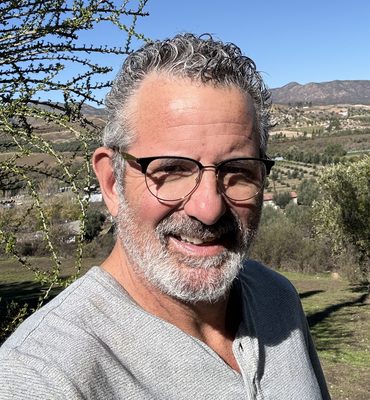
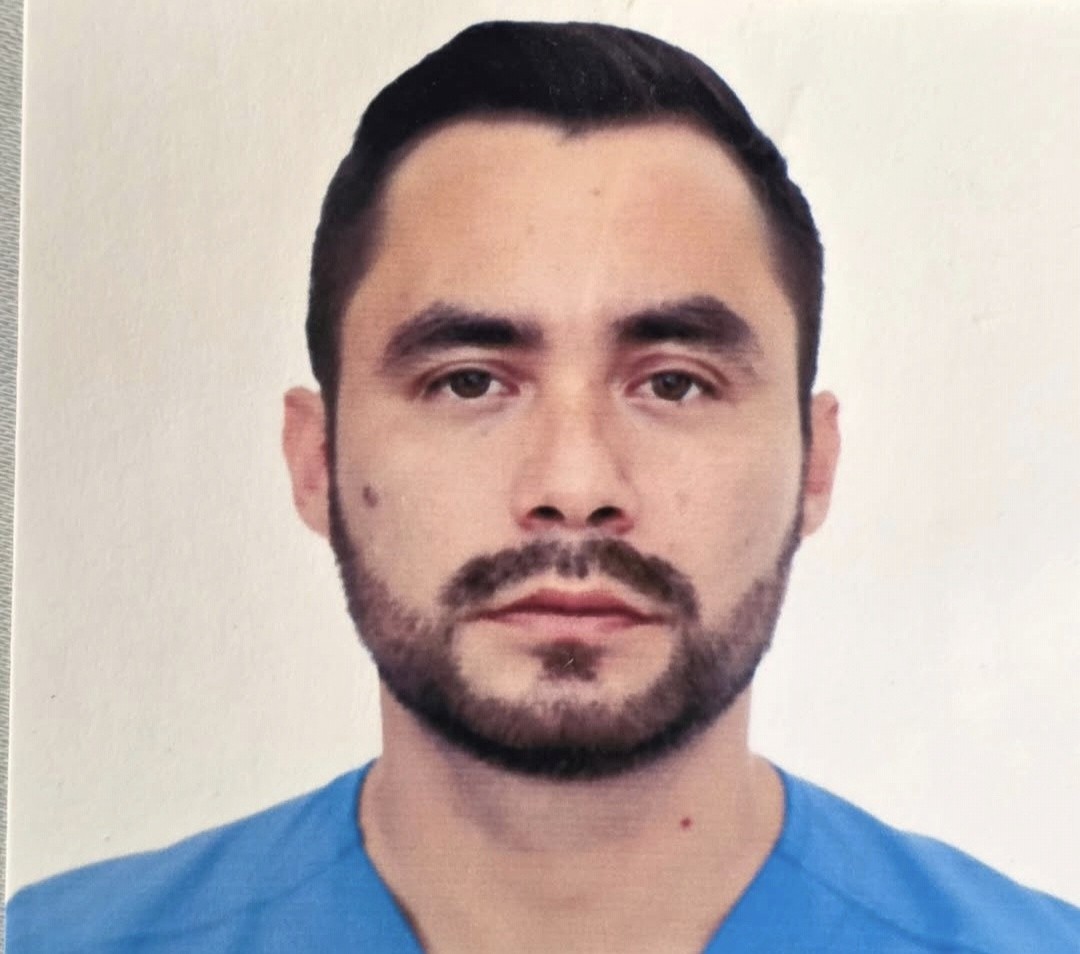
So who is he?
He's a Médico Cirujano (the Mexican equivalent of an MD) who spent ten years as an emergency physician at Hospital General de Cozumel, an accredited teaching hospital with active residency programs, before he ever touched ibogaine. He currently serves as the hospital's Chief of Medical Education and Quality. He's also the person the clinic needs to legally operate. In Mexico, having a licensed physician on record is part of what makes an ibogaine facility possible. In the room, he's the one watching the cardiac monitor during a flood session. In any serious emergency, he's the one who has to act. His license is on the door. His judgment is the last thing standing between a patient's QT interval and a cardiac arrest.
And, as it turned out, he was often the last person the owners bothered to tell about who was coming in next week.
How he got here.
Calderón was born in Cozumel, an island on the Caribbean side of Mexico that most Americans know as a cruise stop. He went to medical school in Guadalajara (ten years, including residency), came home, and built a career in emergency medicine. In September 2020, he received the Condecoración Miguel Hidalgo en Grado Collar, Mexico's highest national honor, recognizing him as one of 58 healthcare workers honored for their COVID-19 service.
A businessman who had grown up in the same circles called him around 2019. The man had treated his own addiction at a facility in Playa del Carmen and had a good result. He wanted to open a clinic of his own and thought Calderón was the right doctor to anchor it.
Calderón's honest first reaction: "I don't even have a clue what it was. I was like, oh my God, this could be possible. I was skeptical. I was like, mmm, I don't think so, but let's see. I'm always open to listening and learning new things."
So he went to Playa to observe. Then he went to San Miguel de Allende to actually learn, at a clinic that has been running for more than twenty years under a man he knew only as Rocky. An ex-addict, not a physician. The setup was minimal: a small defibrillator, a basic monitor, no crash cart, not much else.
"When I was there, it was scary," Calderón said. "Because they just had this little defibrillator, a little monitor. No crash cart, not a lot of medicines you could use. And I was like, how can these guys work like this?"
Rocky is still operating, quietly, two or three patients a week. Calderón never got his phone number.
What the doctor actually does.
His protocol has three phases. Day one: EKG, physical exam. Day two: a microdose of around 100 to 150 milligrams, adjusted for weight, just to gauge tolerance. Some patients trace and buzz on that dose. Others feel nothing. Both are useful information. Day three, Wednesday morning: the flood.
During the session, he stations licensed nurses in every room, all of them ACLS certified, all trained to read an EKG in real time. He moves between rooms. The thing he's tracking is the QT interval, the segment of the cardiac cycle that ibogaine can stretch in ways that become life-threatening.
"The QT segment is the most important thing as a physician," he told me.
And then, a few minutes later, this: "Suddenly it all moved very quickly. Hey, doctor. Bed one is having torso de pointers." Torsades de Pointes, a potentially fatal arrhythmia. "So I just ran to his room. Okay, put magnesium, put atropine. And boom, he was good again."
He described it the way a plumber might describe fixing a burst pipe. This is the job.
He also developed a Parkinson's microdosing protocol over several years, starting from a flat dose of 50 milligrams per day that someone handed him and that wasn't working. He started adjusting for weight, electrolytes, comorbidities, other medications, and found the effective range varied enormously between patients. "I need to find your sweet spot," he told me. "Because some people are going to feel good with 75 milligrams a day and some people are going to feel good with 200 milligrams a day."
At one point he was seeing roughly 80 percent success in Parkinson's patients. Then the results started dropping. Then worse. He traced it back to the supplier: they had switched the ibogaine source without telling him. The purity had changed. The pills weren't consistently weighed. "Come on, I'm the doctor, I need to know that," he said. "I was blind sometimes, you know."
One more detail worth including, because it tells you something about the detox work and about Calderón's instincts. During withdrawal, patients sometimes demand opioids to get through it. He sometimes gives them saline instead. "And it works," he said. "Well, I'd say 50-50." The other half figure it out. "Yeah, they know how they're feeling." He said this with a laugh.
What the owners wanted.
Calderón has tried to address his concerns with a former employer formally. They haven't responded. Some specifics stay out of this piece for now. The general picture is damning enough.
"Everything is a business, right?" he said. "And right now, all the owners are just filling the beds. They don't mind if they are eligible or not eligible. They are just filling the beds."
When he started rejecting patients, the owners' response was consistent: keep working, you can handle it.
He described one case he'll call Dr. Ken, an American who arrived with a baseline QTc of 550 milliseconds before ibogaine was administered. That number alone is a red flag. Calderón rejected him. The clinic sent him anyway for a Parkinson's microdosing protocol. When Calderón gave him a test dose of five milligrams, Dr. Ken's QTc climbed to 600. Calderón stopped. The patient was sent home without treatment, frustrated and out whatever money he'd spent.
He also described a physician he met recently who had worked at a clinic where a patient died. The story that doctor told him was nearly identical to his own experience: a CEO pressuring medical staff to accept patients regardless of eligibility. "They don't care about the medical decision," Calderón said. "So that's when things can happen."
He never saw the intake list before patients arrived at the clinic.
"I didn't even know who was coming until I saw them at the facility," he said.
Is anyone watching?
COFEPRIS, Mexico's equivalent of the FDA, can close clinics. I asked Calderón if that kind of enforcement meant anything.
"It's Mexico, so I think they just give a bribe, and they just open again."
He thinks credentialing would help, at a minimum. Every person working in an ibogaine clinic should have ACLS certification, he said. Not just nurses and doctors. "Even the cook. Because patients can be having dinner, and suddenly have a cardiac arrest."
The one encouraging sign, for him, came from a meeting the day before we talked. A young team from a clinic in Playa del Carmen sat down with him. He asked about their rejection rate. They said they turn away at least twenty patients a month.
"And I was in shock," he said. "Because normally they are like, no, just bring it here."
Twenty rejections a month. He found it remarkable that he found it remarkable.
So where does he go now?
Calderón has an Instagram account called ibogaparadise that he started a couple of months ago to share what he calls "the scientific and the right way." He's not opening a clinic yet. He has offers. The Playa team is one of them. His father recently died and left him a house in Playa del Carmen. He's thinking about it.
What he wants, if he tries again, is a seat at the table. Not just the doctor they call when something goes wrong, but someone who knows who's coming in, what the intake looks like, whether the beds are being filled responsibly. A partner, not a problem-handler.
"I failed twice, heartbroken right now," he said.
He didn't say it for sympathy. He said it the way someone talks about a lesson that cost them something real.
One thing before you book.
He ended our call with advice for patients and families. It was simple.
"You need to be aware, when you contact whatever clinic you are contacting, whether they are just trying to sell, or whether they really care about your health and your healing. If you have a red flag, make sure they send you to the right place before you book. Because they're all about the booking, and if you're not eligible, they let you come anyway."
The person standing between you and the cardiac monitor during a flood session is the onsite physician. Ask who that is. Ask what happens when they say no.
About the subject
Omar Calderón, M.D.
Emergency medicine physician and Chief of Medical Education and Quality, Hospital General de Cozumel. Has provided ibogaine-assisted treatment in Cozumel for the past six years.
A draft of this piece was shared with Dr. Calderón for accuracy review prior to publication.