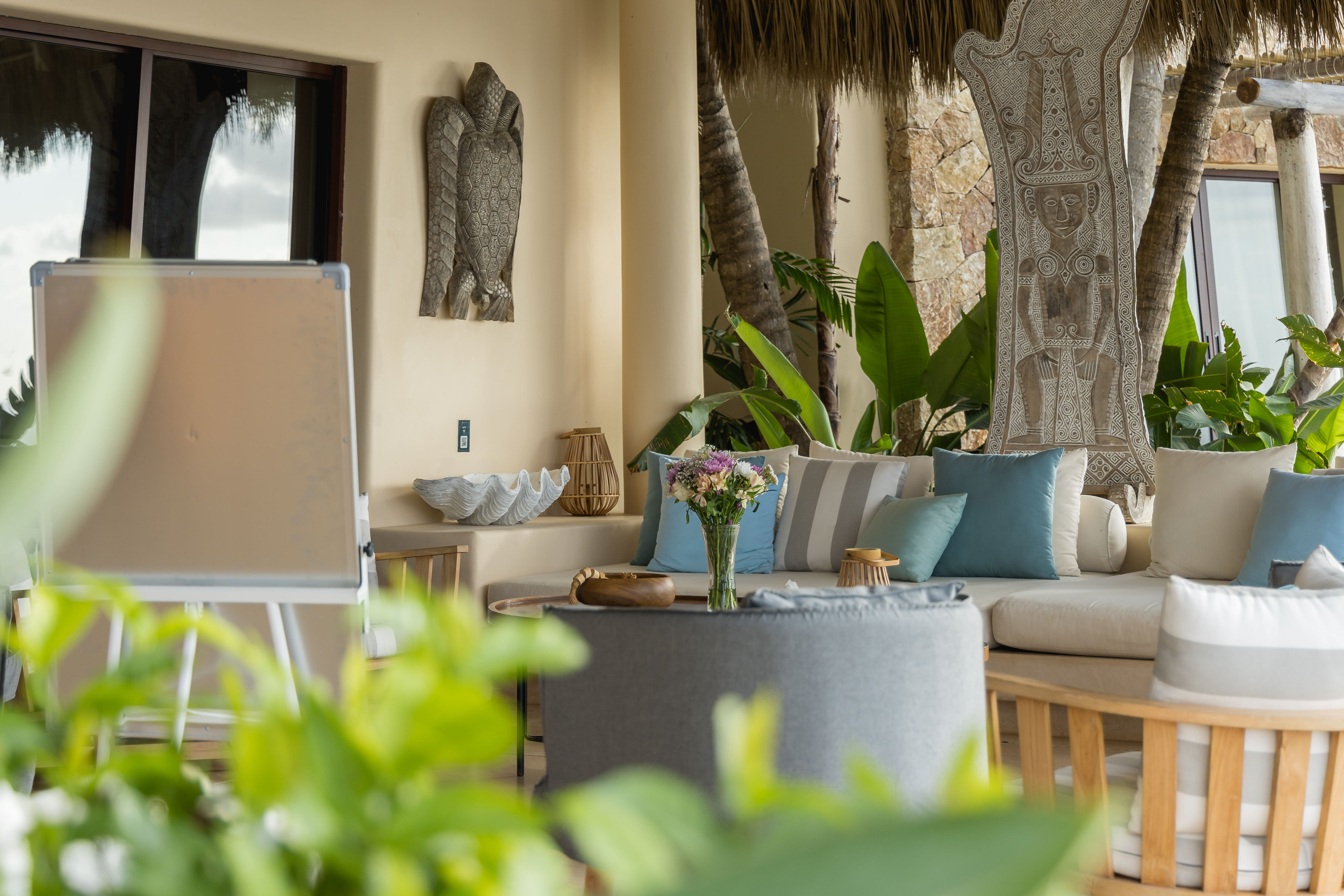
This profile is based on a recorded interview with Andrew Tansil conducted in June 2026. We reached out before publication for additional details, including the names of the two on-site ER physicians, current pricing, and facility photos. We have not received a response as of the publish date. We will update this profile when we do. All other details are as provided during the interview.
Sayulita Wellness Retreat is an ibogaine and psychedelic treatment center on the Pacific coast of Mexico, about 45 minutes from Puerto Vallarta. Andrew Tansil built it from scratch, in a country he moved to during COVID with no clinical background and no plan. Five years later, ibogaine accounts for roughly 80 percent of the clinic's business, and the program is benchmarked for the hardest cases it sees.
The God Molecule
Andrew spent the better part of a decade trying to fix his brain. Multiple six figures on hospitals, pharmaceuticals, fasting, spiritual schools. He joined a church and led it for a while. He tried willpower programs. Nothing worked. He gave up more than once.
He was living in Mexico during COVID, running a virtual marketing agency out of an RV, when he saw an Instagram ad for something called the god molecule. He messaged the shaman and asked if he could just buy some. The shaman said come do it instead.
"I had no idea what I signed up for," he told me. "God molecule sounds cool — that was basically it."
What followed was three weeks on the beach in Sayulita: 5-MEO-DMT, then mushrooms, then ayahuasca, all in sequence. The cumulative effect was something a decade of professional treatment hadn't touched. He was 37. He looked around at the volume of suffering he recognized in people back home and thought: if this worked for me, it might work for them. Let's build something that gets them here safely.
He started with psilocybin, because the infrastructure is lower and the capital requirements are smaller. The first year was a proof of concept. By the second year, he had the equipment, the medical team, the capital — and he bolted on ibogaine. He had watched it work from close enough to know what it could do.
The Neighbor's Yard
When Andrew moved to Sayulita, he settled next door to another shaman who was running ibogaine for homeless men addicted to meth. No preparation. No integration. Just the medicine, and then back to the property — working the land, sleeping on-site, going into the woods with the shaman.
He watched the same thing happen over and over. Men who came in addicted and lost left changed and functioning.
"I've seen people stop doing drugs. I've never seen people go from addicted to like positive, and actually having a good life after." Andrew Tansil, Founder
That observation is the foundation of what he built. Not the theory of ibogaine, not the clinical literature — what he saw in a neighbor's yard with no infrastructure at all. The medicine worked, even stripped of almost everything. His question became: what happens when you give it everything it deserves?
The Program
Sayulita runs its program benchmarked for people in active addiction who need on-site medical detox before they can begin. That standard drives every other design decision. Everything else filters down from there.
Before arrival, patients submit EKG results, blood work, full medical history, and drug test results. The onboarding questionnaire is required within 48 hours of booking. The clinic does redundant EKGs on-site regardless of what arrives in advance. Most patients book 30 to 68 days out.
On-site detox, for those who need it, is medically supervised tapering with fast-acting opioids to manage withdrawal symptoms and iboga microdoses throughout. Iboga has documented effects on reducing withdrawal severity — Sayulita uses it that way deliberately as a preparatory tool, not only as ceremony.
The treatment week begins with an opening ceremony and includes hypnotherapy, anti-inflammatory nutrition throughout, one-on-one psychologist sessions, somatic therapy, breathwork, yoga, ice bath, and work with their shaman, Victor. Reiki, massages, horseback riding, and a snorkeling boat tour to the islands off the coast round out what is, structurally, a full-immersion week designed to hold the patient while the medicine works.
The ibogaine protocol runs two flood doses. The first is a full flood. The second is a mini dose titrated up toward flood based on each patient's response. HCL is used for all flood doses; root bark is used for microdosing. Vitals are connected throughout. Someone is physically at the bedside for each session — not monitoring from a screen in another room. Magnesium IV is administered during treatment to actively manage QT intervals. A cardiac arrest triage unit is on-site.
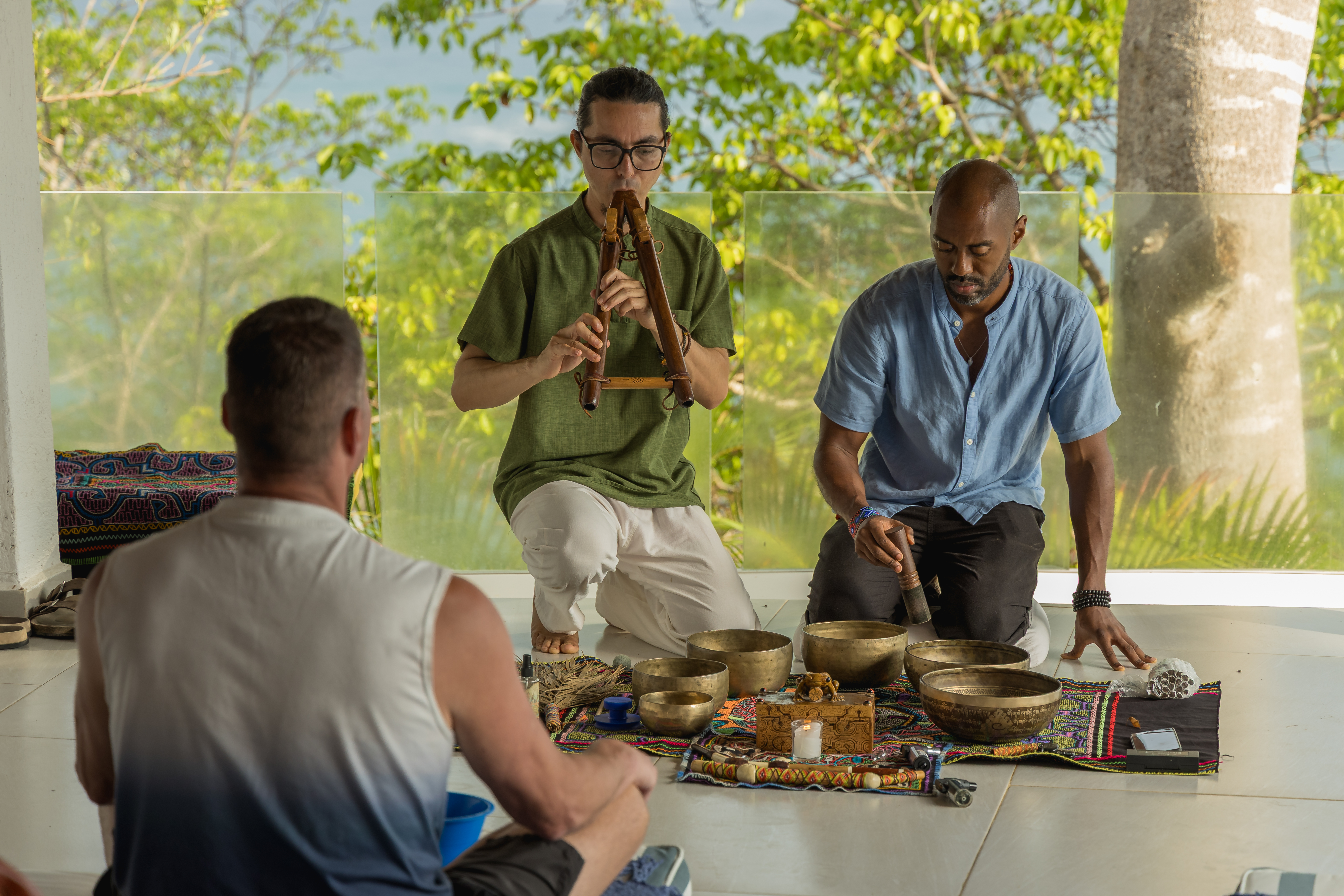
Sound healing with Victor during the integration week.
5-MEO-DMT is administered the day after the first flood dose, during the integration period. Andrew's framing: ibogaine takes you higher and gives you the view from above your problems. 5-MEO does the ego dissolution. The combination, in his experience, opens people at a depth that compounds rather than replaces what the ibogaine initiated.
"It has that ability to just push people out of the way and get the thing done and say, here's your life back, you can have it, it's perfect." Andrew Tansil, Founder
Integration extension: Patients who want more time before returning home can stay for a seven-day extension program at the retreat — wellness activities designed to hold space and deepen integration before re-entry.
Aftercare begins when patients go home. Each leaves with a written commitment plan developed with the on-site psychologist. Weekly group calls keep the cohort connected, with familiar staff moderating, so participants have ongoing access to people who understand the complete arc of what they went through.
The Three Buckets
Andrew frames ibogaine risk in three categories: cardiac history (previous heart surgery, stents, pacemakers — automatic disqualifiers), drug interactions (testing prevents dangerous combinations), and hypersensitivity or allergy to ibogaine itself.
The staged dosing protocol addresses that third risk directly. Patients receive an iboga microdose first, then an HCL mini dose, before going into a full flood. If someone is going to react, the earlier stages catch it before full exposure. Sayulita has not had an allergic reaction event. The protocol exists for when it does.
"As long as you test, get medical approval from qualified doctors that can read EKGs and blood work, go through proper dosing and testing, you're pretty much clear skies," Andrew said. "That's what we do, and that's what I think everybody should do."
Two ER doctors are on-site during treatments. A full cardiac arrest triage unit is staged and ready. QT intervals are actively managed with magnesium throughout. The approach, as Andrew described it: do everything to prevent cardiac arrest, and have everything ready if it happens anyway.