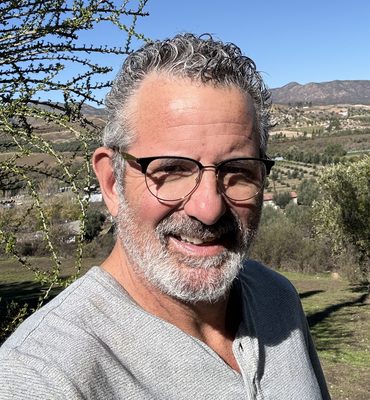
Some conversations open easily. This one opened carefully. Spend any time researching ibogaine and you will run into an 80% success rate. That figure is everywhere: it is what clinics advertise, and it is what turns a nervous inquiry into a booked retreat. Dr. Martin Polanco will not stand behind it. What he offered me instead is the heart of this profile, and the reason it is worth your time.
Dr. Martin Polanco has been treating people with ibogaine since 2001, back when, as he put it, the medicine was a stepchild of the psychedelic world. He has watched it covered badly enough, for long enough, to be measured about who he talks to and why. By the time our call ended, he had earned my attention twice over: once for how long he has done this work, and once for what he was willing to say against his own best marketing.
- Founder Dr. Martin Polanco co-founded one of Tijuana's earliest ibogaine clinics in 2001 and founded The Mission Within in 2017. Two decades of longitudinal observation few operators can match.
- Combines ibogaine with a low-dose 5-MeO-DMT session, about a third of a standalone dose, run as a trained protocol with a documented clinical origin.
- Cohort retreats of five to seven people, five days and four nights, from a private house outside Tijuana, 30 minutes from the San Diego airport.
- Standard cost is $8,000 from July 2026, including five preparation and integration coaching sessions. In 2025, roughly 70% of participants attended on a veteran or first-responder scholarship.
Whom I spoke to
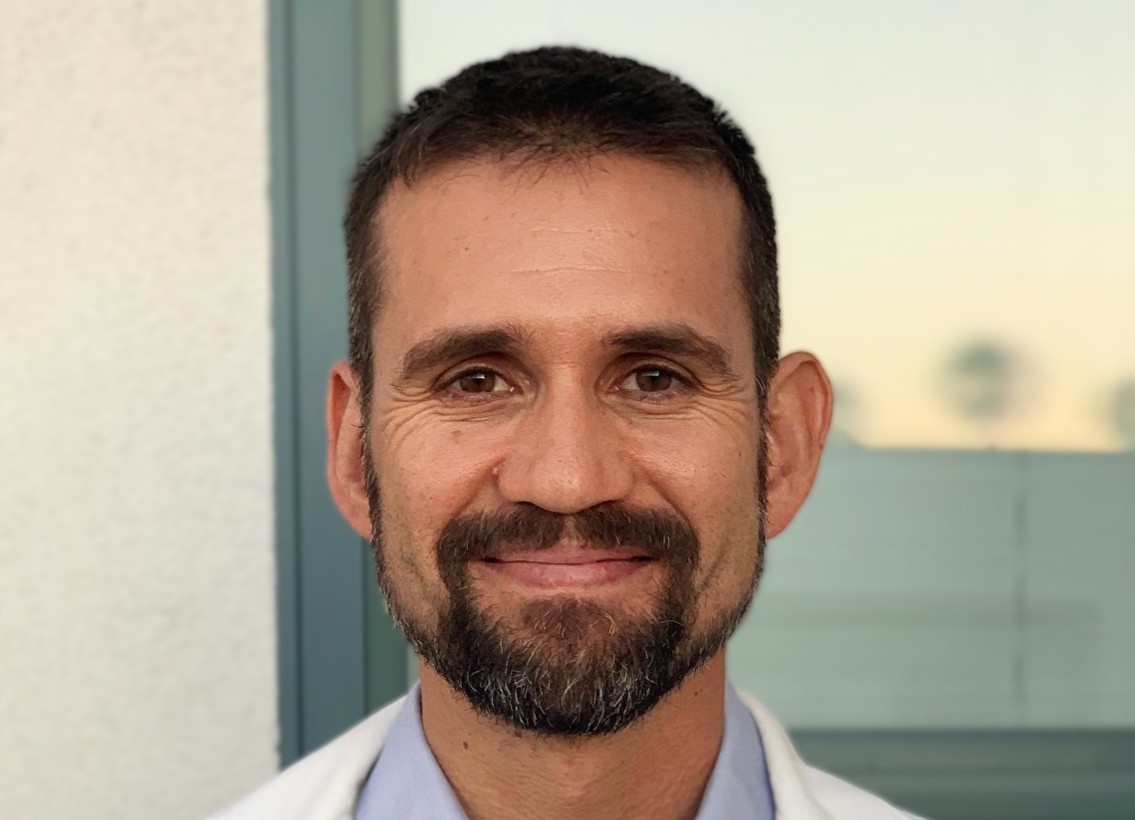
I did not come to The Mission Within cold. I was introduced to Dr. Polanco by a veteran, an Army Ranger who had been treated at the clinic and spoke about him with real regard. That referral shaped how I heard the conversation that followed.
Dr. Martin Polanco is a licensed medical doctor in Mexico and the founder of The Mission Within. What pulled him into this work, he told me, was partly a fascination with plant medicines and partly something closer to home: a family member who struggled with addiction, and whom ibogaine helped. He decided to build a career around making the treatment more available.
He has been at it far longer than the current wave of attention. He has been doing this "before it was cool" delivering the line with the dry confidence of someone who means it. For years, ibogaine was the stepchild of the psychedelic community: almost no research money, and a reputation for being dangerous. You can hear the two decades in the way he talks. He is not pitching a discovery. He is reporting on something he has watched up close for a very long time.
This is how he got here. The earlier clinic was the Ibogaine Association, which he co-founded in Tijuana in 2001 and later sold before moving into consulting. It is the same operation referenced in some of the early ibogaine literature. A former patient eventually pulled him back into direct treatment, and the two of them started a project together. That became Crossroads, around 2012. Veterans began coming through Crossroads in 2015. In 2017 he founded The Mission Within, the veteran-focused practice the work had been moving toward.
The Clinic and the Foundation
One distinction is worth stating plainly, because it is easy to get wrong: The Mission Within and the Mission to Live Foundation are two separate things. The Mission Within is the clinic. The Mission to Live Foundation is a nonprofit, led by its CEO, Jay Kopelman, and it is deliberately clinic-agnostic. It has funded veterans to complete programs not only at The Mission Within but at Beond, New Path, Ambio, and other ibogaine clinics.
What the nonprofit structure changes, in practice, is reach. Because the Foundation is not tied to a single clinic or a single protocol, it can fund services that sit outside what any clinic provides on its own: meditation training, functional medicine, and other support shaped by what individual donors want their money to do. That is a layer a for-profit clinic cannot easily build by itself.
The effect on who actually walks through the door is significant. In 2025, roughly 70% of the people who retreated with The Mission Within attended on some form of scholarship as a veteran or first responder, full or partial, covering the retreat itself along with preparation and integration coaching. Most of that funding came through the Mission to Live Foundation and its donors, though several other nonprofits work directly with the clinic and bring their own scholarship charters.
Who They Treat
The picture most people carry when they hear "ibogaine clinic" is wrong here. The Mission Within does not detox. If a medical taper is what someone needs, that work gets done somewhere else, and a retreat date is not set until they arrive clear. What walks through the door instead is the layer underneath. Polanco treats trauma and traumatic brain injury: the long aftermath of combat, of sexual violence, of grief that never got room to breathe, of a childhood somebody is still flinching from. Substance use is often what shows up in the picture. It is rarely what put it there.
It did not start there. Crossroads, the practice Polanco ran before The Mission Within, opened as an addiction clinic, mostly opioid detox, almost always polysubstance. Rarely, he said, did you get someone who used just one drug.
The turn began in 2015. A handful of veterans came through Crossroads for the addiction work and, on the other side, reported that their PTSD symptoms were gone. He and his team started chasing it: documenting outcomes, running brain scans. In 2017 he founded The Mission Within. The practice worked almost exclusively with veterans until roughly 2023, when it opened to civilians who carried the same underlying picture.
Today the cohort also includes first responders and a small number of professional athletes (NFL players, boxers), alongside people Polanco calls biohackers.
One clinical observation underlies all of it. Much of what presents as PTSD, in Polanco's view, is actually traumatic brain injury. Anyone who has handled modern weaponry, he said, carries at least a mild TBI from cumulative blast exposure, an injury he likened to what a football player accumulates: often invisible for years before the symptoms surface looking like PTSD. The biohacker patients arrive at that same door from a different direction. They have read the research that ibogaine increases white matter and may repair damage from conditions like long COVID, and they come looking for brain optimization. For that group the outcomes get measured differently: cognitive surveys on learning, memory, and executive function rather than disease symptoms.
Screening and Safety
For most readers weighing an ibogaine clinic, this is the first real question, and it is the right one to ask first. Ibogaine's effect on the heart is the reason it has to be taken seriously.
Screening at The Mission Within is led by a US-licensed registered nurse, and it is the second step in the application process. Every candidate goes through a medical-history review and a thorough check of drug interactions before anything else. Polanco was blunt that this is non-negotiable, given ibogaine's cardiac and metabolic profile. Depending on what that review surfaces, an applicant may be asked for additional bloodwork, an EKG, or clearance from their other care providers. Candidates with contraindicated medications or cardiac risk factors are not cleared. That is the part worth underlining: the screening can, and does, end the process.
Screening also addresses substance use. The Mission Within is not a detox program, and Polanco was clear that this is a hard line. Applicants whose use requires a medical taper are connected with outside providers before any retreat date is set; everyone who arrives must already be clear of required substances and medically tapered. Like the cardiac screening, this is a step the process can end on.
The cardiac workup continues on site. On the day of treatment, participants receive an echocardiogram and an EKG, and a stress test if it is indicated. During the ibogaine session itself, cardiac monitoring is continuous, with IV hydration and magnesium prophylaxis, and medical staff are in the room the entire time the medicine is active.
What the Stay Looks Like
A standard retreat runs five days and four nights, in a group of five to seven people at a time.
Participants fly into San Diego on Thursday. On Friday morning the cohort meets its US staff in San Diego and drives across the border together. Friday's medical intake is the on-site workup: echocardiogram, EKG, lab work, and urinalysis. Ibogaine treatment begins Friday night and continues into Saturday. Sunday brings the optional 5-MeO-DMT session, offered to participants who are cleared to continue. Monday is given over to deeper integration and direct group work, preparing people for what comes next. Participants return to the US on Tuesday morning.
Polanco recommends staying in San Diego on Tuesday night before traveling home. It is a small thing, but a deliberate one: the hours just after a retreat matter for integration, and the buffer supports a more responsible re-entry.
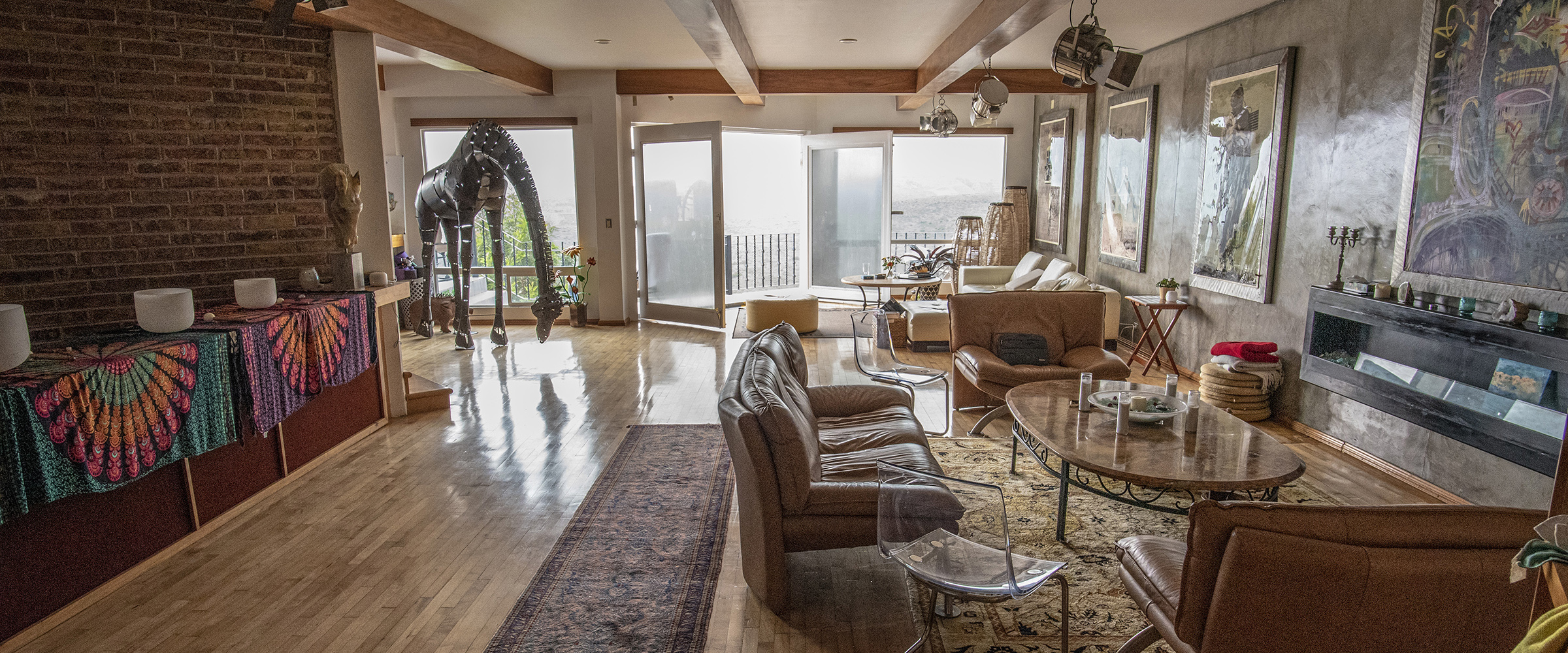
The clinic operates in Tijuana, a 30-minute drive from the San Diego airport. That distance is part of the design. It keeps the medical infrastructure of a major US city within reach while the treatment itself takes place where ibogaine is legal. The setting is an upscale house in a protected community, with security at the main entrance.

Integration and Aftercare
Polanco was emphatic on one point: the medicine alone is not enough. He said that became obvious in the early addiction work. Patients needed structured integration, and sometimes needed to relocate away from the environment where they had been using. Long-term coaching and support, in his telling, has always been treated as core to the work rather than an add-on.
The standard retreat includes five individual preparation and integration coaching sessions, delivered by US-based staff, with a heavy emphasis on licensed mental health professionals alongside veteran and peer-support community members. Beyond that, every person who has been through a retreat is invited to a free weekly group integration session, which Polanco said is well attended and has become a real community in its own right.
For veterans, additional support is often funded through the Mission to Live Foundation and through other donor-backed nonprofits. Some donor packages go well past the standard. One donor specifically supports Marines and funds up to twelve sessions of preparation and integration, along with a program Polanco called the Wisdom Dojo: a ten-week, one-on-one meditation training course.
Meditation, in his framing, is the central tool for holding onto the benefits of an ibogaine experience.
"If a patient can maintain a daily practice of meditation, even if it is just 10 minutes a day, it makes a world of difference."Dr. Martin Polanco, The Mission Within
He was also candid about expectations, and this was the first place I felt the conversation warm up. The clinic tells patients that even without a visionary experience, the treatment still works on the brain and resets the neurology. A good 30% of people, he estimated, have no visions at all. And he was direct about relapse: the clinic prepares patients for the possibility, frames it as part of recovery rather than a catastrophe, and pushes back on the culture around 12-step sobriety dates, which in his experience can send someone spiraling after a single slip. Every slip, as he put it, is not a fall.
The 5-MeO-DMT Protocol
The Mission Within combines ibogaine with 5-MeO-DMT, and this was the stretch of the call where Polanco spoke most freely. No hedging, no caveats held back for a stranger on the phone. This is clearly the work he is proudest of.
He stressed that the combination is delicate. Because ibogaine sensitizes the brain, the 5-MeO dose has to be far smaller, roughly a third of what would normally be given. Clinics that administer a standard dose, he said, risk overwhelming the patient and producing an experience that is hard to integrate. Doing it safely takes specific training.
He met the skepticism head-on, and I appreciated that he did not wait for me to raise it. People who have never done the combination, or never seen it done, sometimes assume it is marketing, or overkill. The protocol, he said, did not start as a selling point. It started at Crossroads with a real clinical problem. Some addiction patients were finishing their ibogaine journeys despondent and unintegrated, because the medicine had shown them the wreckage their addiction had caused, and they were about to head home in a fragile state, likely to relapse. Polanco knew from his own 5-MeO experiences that the compound produced hope, optimism, joy. The team tried it with one patient. It turned his experience around, he said, and let him walk into sobriety with hope instead of despair.
"If you are gonna stay clean, you have to have hope."Dr. Martin Polanco, The Mission Within
From there the protocol moved into the veteran population, mostly by word of mouth, until veterans began requesting it by name, though Polanco told me he believes many would do well with ibogaine alone.
He described the two compounds as complementary at a neurological level. They act on different receptors, with 5-MeO appearing to reduce inflammation and ibogaine producing a potent neurogenesis effect. Ibogaine, as he describes it, tends to produce a waking, life-review kind of experience rather than a mystical one. 5-MeO reliably produces the mystical experience: a sense of unity, oneness, what he called infinite love. That, he said, is what lets a person let go of what surfaced during the ibogaine journey. Veterans often report seeing deceased friends in a better place, and being able to release moral injury, guilt, and shame. He added a detail I had not heard before: a 5-MeO experience taken after ibogaine tends to be more visual than a standalone one, because ibogaine metabolites are still in the system. He referenced a book on the pairing, titled The Root and the Crown, and used its image directly: the ibogaine is the roots, the 5-MeO is the crown.
The Research
Polanco and his teams did much of the early documentation themselves. When he started, neither ibogaine nor 5-MeO-DMT had any real presence in the NIH literature, so the clinics built their own evidence base. Much of the clinical data informing today's ibogaine literature, he told me, was built through the patient populations he worked with at Crossroads and The Mission Within, beginning with the veteran outcomes documented from 2015 on.
That work has since moved into formal academic settings. The Mission Within's primary institutional research partners are the Dell Medical School at UT Austin, UCSF, and Sheba Medical Center in Israel. Polanco described the collaboration as among the first to bring ibogaine into a formal academic medical center outside North America.
On outcomes, Polanco did the thing that tells you a clinic isn't overselling. He took apart the headline number without being asked. Instead of the widely cited 80%, he described a roughly even split. About 30% of addiction patients are completely clean three years out, which he noted still compares very favorably to the 5 to 10% typical of conventional rehab. Another 30% or so relapse but end up meaningfully better off, which he framed as a harm-reduction win, moving from heroin to cannabis, for example. And the last 30% relapse without lasting improvement.
On what is still unknown, he was generous with the gaps. Science still does not understand the mechanism by which ibogaine works. There has been no Phase 1 or Phase 2 research in the United States, which leaves ibogaine well behind psilocybin, MDMA, and 5-MeO-DMT on the path to FDA approval.
And then there is the part of the plant almost no one has looked at. Ibogaine is the most studied alkaloid in the iboga plant, but it is not the only one, and Polanco thinks the others deserve serious attention. His hypothesis is that some of them may carry more pronounced neuroregenerative properties than ibogaine itself, potentially with a more favorable cardiac profile. If that holds up, it could point toward treatments that keep ibogaine's therapeutic mechanism while reducing the cardiac risk that currently defines it. He was careful to call this a hypothesis. The field, in his words, has barely begun.
Cost and Access
The Mission Within's pricing is unusually simple, and Polanco stated it without hedging. As of July 2026, a standard five-day, four-night retreat costs $8,000. That figure is the same whether you come as a veteran, a first responder, or a civilian. It is the standard public price.
| Item | Cost | Notes |
|---|---|---|
| Standard retreat (5 days / 4 nights) | $8,000 | From July 2026. Same price for veterans, first responders, and civilians. |
| Initial health screen | $75 | One-time, for the initial medical review. Replaced a former $500 deposit requirement. |
What the retreat fee includes: the retreat itself, all lodging, all food, transportation between the meeting point in San Diego and the clinic in Mexico, and five individual preparation and integration coaching sessions. Polanco was explicit that the retreat fee and the $75 health-screen fee are the only charges. There are no other fees.
A few things sit alongside the standard retreat. At least two staff members in every cohort are US citizens, and many are US military veterans. The Mission Within also runs specialized retreats that differ from the standard model, and it works with nonprofits like the Mission to Live Foundation on custom programs, for instance additional coaching sessions attached to a specific donor package. Private group retreats of five to seven people are available for small groups, nonprofits, and specialized needs.
On scholarships: veterans with financial need are pointed to their Enrollment Guide to discuss what is currently available. Most scholarship opportunities are for US military veterans, though Polanco said openings come up for other groups too, including first responders, spouses of veterans, and foreign military veterans.
What Sets Them Apart
A few things came out of the conversation worth surfacing. The first is the 5-MeO-DMT protocol itself. The Mission Within treats the ibogaine and 5-MeO combination as a dose-specific, trained practice with a documented clinical origin, not an add-on. Polanco can explain the dosing logic, the receptor-level rationale, and the exact case it came from. That is a different thing from a clinic that offers 5-MeO because patients ask for it.
The second is the clinical lens. The Mission Within treats people carrying TBI and trauma: military service, moral injury, grief, childhood and sexual trauma. Substance use sits alongside those conditions, but the clinic is not a detox program; applicants who need detox are referred out before a retreat date is set. Polanco's working view, that much of what presents as PTSD is actually blast-related TBI and neuroinflammation, runs underneath the entire patient population, not just veterans. The third is tenure. He has been treating people with ibogaine since 2001, well before veteran-focused philanthropy and policy momentum arrived, which gives him longitudinal observations very few operators can claim.
And the fourth is that integration is built in rather than bolted on. Five preparation and integration sessions come standard, every alum is invited to a free weekly group session, and the Mission to Live Foundation and other donors fund deeper packages for veterans. Integration is structural here.
What Surprised Me
The 30 / 30 / 30 split. I went in expecting the 80% number, because that is the number everyone repeats. Polanco took it apart without my asking. The 30 / 30 / 30 is my shorthand for the breakdown he walked me through: roughly a third of addiction patients completely clean three years out, roughly a third who relapse but land somewhere meaningfully better, and roughly a third who relapse without lasting improvement. He is not standing behind the flattering statistic. For a directory built on telling the truth about this treatment, that landed with me.
The detox refusal. Going in, I had assumed an ibogaine clinic treating a lot of veterans would also be the place those veterans came to get clean. The Mission Within is not that clinic. Anyone who needs to detox is referred out before a retreat is scheduled, and everyone who arrives has to be clear of required substances and medically tapered. That is a different operational identity than I had pictured, and I think most prospective patients would not expect it either.
The dosing detail. One third of a normal 5-MeO dose after ibogaine, because the brain is already sensitized. It was a small, specific, clinical thing, and it was the moment the 5-MeO protocol stopped sounding like a pitch and started sounding like medicine.
How much weight he put on hope. Polanco kept returning to it. Even without a visionary experience, he said, the treatment still resets the brain, but without hope a person will not stay clean. It made me think of Curt Richter, the Johns Hopkins scientist who, in the 1950s, placed rats in water they could not escape. Wild rats gave up within minutes. But when Richter briefly lifted those same rats out, held them, and then returned them to the water, they swam on and on. He concluded they had not been given more strength, only a reason to expect rescue, and that was enough. I do not think Polanco was reaching for a metaphor when he talked about hope. I think he was describing the same thing from the clinical side: that the job of the 5-MeO session, at the end, is to send someone home with a reason to expect rescue.
Polanco did not hand himself over easily, even with a trusted introduction in hand. He is careful, and the longer we talked, the more sense that made to me. Ibogaine has been written about for years by people with agendas of their own, and a practitioner who has lived through that coverage learns to be sure of who is asking before he answers. By the end I trusted that care more than I would have trusted an easy openness.
And he did open up. Polanco has been doing this long enough to have real longitudinal data, and he was willing to use that data against his own marketing. That is rare. The 30 / 30 / 30 framing, the insistence that the medicine alone is not enough, the caution about expectations: none of it was the polished version. It read as someone who has watched this work for two decades and has stopped needing it to sound like magic.
One thing to know going in: the work itself sits on TBI and trauma, but the cohorts, staffing, and scholarship structure are heavily veteran-shaped by history and by the donor ecosystem around the clinic. In 2025, roughly 70% of participants attended on a veteran or first-responder scholarship. Civilians are welcome and pay the same price. If your picture is closer to TBI or layered trauma, whether you wore a uniform or not, this is a clinic that has been pointed at the underlying condition for the better part of a decade, by a founder who can describe the work plainly because he has done it for that long.
IbogaineAdvisor is independent of every clinic in this directory. We don't take referral fees, we don't sell leads, and we weren't paid to publish this profile. The link above goes directly to the clinic's website.